Showing posts with label lunch. Show all posts

Kale Poriyal

Ingredients

  • Kale - 1 bunch
  • Onion - 1
  • Moong dhal - 1/2 cup
  • Mustard, Urad dal & 2 red chillies for seasoning

health tip

Kale is rich in fiber and is a good source of Vitamins like K, A, & C & minerals like folate & iron. Kale is also rich in flavonoid called kaempferol which helps to protect against ovarian cancer.

Kale Poriyal

method

Kale is a leafy green vegetable that belongs to the Brassica family which also includes vegetables like cabbage, collards and Brussels sprouts. I have tried Kale before but it has always been on and off. However, after getting to know its health benefits, I have become a convert & decided to add Kale regularly in our diet. This recipe even after multiple tries still tops the chart in our home.

  1. Cut the vein in the middle. Chop it finely & wash it.
  2. Chop the onion. Wash & soak the moong dal for 5 minutes but not more than that.
  3. Heat some oil in a pressure pan & season it with mustard seeds, urad dal & broken red chilli. Saute the onion. When onion turns soft add the chopped kale & moong dal & saute it for two more minutes.
  4. Add 1/4 cup of water & let it cook for 1 whistle. Add salt after the pressure goes off. Salt should not be added to greens while they are cooking. I am not sure about the reason (probably it might alter the taste I guess) but is always better to add salt at the end after the greens are cooked. Serve it with rice or have it as a salad.

    Toor dal can also be added instead of moong dal. Cook the toor dal & kale separately. Toor dal doesn't have to be over cooked like for sambar. Add the dal after the kale is cooked.


Mixed Vegetable Kootu

Ingredients

  • Carrot - 1
  • Eggplant - 1
  • Cabbage -1 leaf
  • Potato - 1
  • Beans - 3nos
  • Peas - 1/2 cup
  • Moong dal - 2 tbspn
  • Green chilli - 1
  • Medium onion - 1
  • Kootu Podi - 1 tspn
  • Coconut - 2 tspn (optional)

health tip

Veggies are rich in Vitamins, Minerals & fiber. Dal (pulses) is rich in protein.

Mixed Vegetable Kootu

method

Kootu Podi goes very well with this mixed vegetable kootu. I added moong dal for this kottu recipe since channa dal was already added to the podi. I did not want to try red gram dal since it is normally added to all sambar recipes. We usually make sambar when making kootu. However, you may use any kind of dal you want with this recipe. This kootu is both delicious & nutritious. Any vegetable of your choice can be added as well to this recipe.

  1. Wash, Peel & dice the veggies & onion.
  2. Wash the moong dal & add the diced veggies & onion along with kootu podi. Add 1/2 cup of water & pressure cook the veggies for 2 whistles or till the dal is completely cooked.
  3. When the pressure goes off, add ground coconut (optional) & salt to taste. Season it with cumin seeds, curry leaves, slit green chilli & urad dal in some oil or ghee.
  4. This recipe serves two people.

Easy Tasty Sambar Rice

Ingredients

  • Parboiled rice -1 cup
  • Toor dal - 1/4 cup
  • Onion - 1
  • Tomato -1
  • Chopped veggies - 1 1/2 cup ( Eggplant, Carrot, Potato, Drumstick, Beans)
  • Sambar powder - 1 1/4 tspn
  • Asafoteida(hing) - 1/4 tspn
  • Fenugreek powder - a pinch
  • Tamarind - a Goose berry size or 1/4 tspn
  • Turmeric powder - 1/4 tspn

health tip

Veggies are rich in vitamins, minerals & fiber. Dhal or pulses are rich in protein. Rice is high in carbohydrate.

Sambar Rice

method

  1. Wash the rice & dal together. Cook it in a pressure cooker till the mixture gets soft & mushy.
  2. Heat some oil & ghee in a pan. Add curry leaves, hing, methi powder and Cinnamon stick. Add the diced onion & tomato. Saute it till tomato gets mushy. Add the sambar powder& salt. Saute it till the oil separates. Add the chopped veggies & saute for some time.
  3. When the pressure goes off, mash the rice dal mixture with the back of the ladle or using potato masher. Mix in the sauted veggies, Tamarind juice & little brown sugar or jaggery. Taste it for salt & spiciness. Add some hot water & cook it for one more whistle. Garnish it with chopped coriander leaves & green onions.

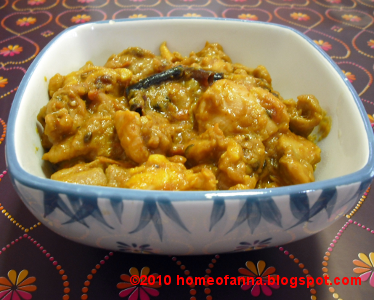
Chicken or Mutton Uppu Kari

Ingredients

  • Chicken or Mutton - 1 pound (1/2 Kg)
  • Chopped  large onion - 1
  • Chopped garlic - 5
  • Chopped tomato - 1
  • Red chillies - 3
  • Chilli powder - 1/4 tspn
  • Turmeric powder - 1/4 tspn
  • Coconut milk - 3 tbspn tinned or milk from a cup of coconut
  • Curry leaves, Fennel seeds, Cinnamon for seasoning.

health tip

Chicken and mutton are both high in protein. Mutton unlike chicken is red meat with more fat. However, mutton is a good source of Iron. It is recommended to go with chicken especially if you are watching your cholesterol.

Chicken or Mutton Uppu Kari

method

Uppu Kari is a Chettinad delicacy usually made with mutton(goat meat). You can use Chicken as an alternative if you are unable to find good goat meat. Where I live, goat meat is hard to find, hence the reason for Chicken in this recipe. Uppu kari is a dry curry cooked in coconut milk spiced with dried red chillies. Majority of the heat in the curry comes from dried red chillies than from chilli powder. Dried red chillies are fried in oil & cooked in coconut milk to make them little bit sweeter. Taste would be even better if you use goat meat or chicken with bone in.

  1. Extract milk from coconut & set aside.
  2. Wash & cut the meat into small pieces. Break the chillies into half. Dice the onion, garlic & tomato.
  3. Heat some oil in a kadai or pressure pan. Since the cooking time varies, kadai may work for chicken but for mutton it is best to use pressure cooker.
  4. Add the seasonings to the hot oil. Fry the broken red chillies. Saute the chopped onion, garlic & tomato one after another along with salt, turmeric powder & chilli powder till tomato gets mushy.
  5. Add the meat pieces & saute them till raw meat smell goes off. Add the coconut milk & cook the meat with lid closed. When the meat is cooked, open the lid & cook it till the liquid condenses or evaporates. If the meat looks over cooked, separate the meat from the liquid & leave it in a bowl till the liquid reduces to 1/4th of its quantity. Finally, add the meat & let it dry out.

Cauliflower Masala

Ingredients

  • Cauliflower - 1/2 of the flower
  • Onion - 1
  • Tomato - 1
  • Channa dal - 3 tspn
  • Ginger garlic paste - 1/2 tspn
  • Curry powder - 1 tspn
  • Chilli powder - 1/2 tspn
  • Turmeric powder - 1/4 tspn
  • Fennel seeds & curry leaves for seasoning

health tip

Cauliflower and other vegetables like broccoli, cabbage, and kale contain compounds that may help prevent cancer. Sulfur-Containing Phytonutrients in cauliflower promote liver detoxification. It is rich in Vitamin C, K and folate. Spicing cauliflower with turmeric helps promote men's health. Channa dal adds protein to this dish.

Cauliflower Masala

method

  1. Soak the channa dal in water for 30 minutes.
  2. Dice the onions & tomatoes. Cut the cauliflower into florets & soak them in warm salted water.
  3. Heat some oil in a pan & season it with fennel seeds & curry leaves.
  4. Saute the ginger garlic paste, onion & tomato. Add turmeric powder, salt, curry powder, chilli powder & drained channa dal. Saute them till the oil separates.
  5. Adding split gram dal(pottukadalai) powder at the final stage will absorb extra moisture & make the cauliflower nice & dry.

  6. When the oil separates, drain & add the cauliflower. Cover the pan with a lid & cook till the florets are 3/4th done. Sprinkle water if needed. Open the lid & let the masala dry out. Garnish it with coriander leaves.

Mor Kuzhambu

Ingredients

  • Sour Yogurt - 2 cups
  • Green Chillies - 2
  • Channa Dal - 1/2 tspn
  • Toor Dal - 1/2 tspn
  • Rice - 1/2 tspn
  • Coconut - 3 tspn
  • Coriander seeds - 1/2 tspn
  • Cumin seeds - 1/4 tspn
  • Hinge - a pinch
  • Turmeric powder - 1/4 tspn
  • Curry leaves - for seasoning
  • Garlic - 1 pod (or) Ginger - 1/2 inch

health tip

Yogurt is rich in Calcium, Vitamin B2, B12 & protein. Yogurt has a friendly bacteria Lactobacillus which helps to regulate the digestive system & boost the immune system. Daily consumption of 3 oz of yogurt helps to lower LDL(bad cholesterol) & increase HDL(good Cholesterol). It helps to prevent stomach ulcers & reduce the risk of colorectal(colon) cancer.

Mor Kuzhambu

method

This dish is very famous in all the southern states of India. This dish goes very well with white rice & paruppu usili. You may make this recipe simple with all the ingredients as listed above or you may enhance it further by adding any available vegetables.

  1. Soak the channa dal, toor dal and rice for 30 minutes.
  2. You may add veggies to this dish but if you do so you need to cook them separately by adding some salt. Refer to the tips section below for more information.
  3. Whip the yogurt for few minutes and set aside.
  4. Grind coconut, cumin, coriander, ginger (or garlic), green chillies and all the soaked ingredients into a fine paste.
  5. Heat some oil in a pan and season it with curry leaves and hinge.

    You may create many different variations of this dish by adding different vegetables. Some of the suggested vegetables are potatoes, white pumpkin, chow chow, okra, yam and Dal koftas(urundais). Remember to fry the Okra before adding to this dish. You may also add dried vathals like manathakkali, sundakkai, okra and eggplanths to this dish but they also require prior frying.


  6. Add the ground paste & turmeric powder to the pan and saute it for two minutes or until the raw smell goes off.
  7. Add the whipped yogurt to the mix & heat them all for couple more minutes. Do not let it boil as the yogurt will curdle with excessive heat.

10 Minutes Vegetable Biryani

Ingredients

  • Basmati rice -2 cups
  • Salt - 1 1/2 tspn
  • Frozen mixed veggies - 2 cups cups
  • Small Potato - 1
  • Biryani masala - 2 tspn
  • Onion - 1
  • Water - 3 cup
  • Mint & Coriander

health tip

Most vegetables are naturally low in fat and calories. None have cholesterol. (Sauces or seasonings may add fat, calories, or cholesterol.)
Vegetables are important sources of many nutrients, including potassium, dietary fiber, folate (folic acid), vitamin A, vitamin E and vitamin C.

Veg Biriyani

method

This is one of the easiest recipes I have ever made. You can add as many vegetables as you like to this dish and are not restricted to just carrot, peas & potatoes as listed on this recipe. Frozen veggies can be substituted for fresh vegetables. Making it in pressure cooker makes the job easier. The recipe in the masala powder box may call for adding more masala than normally required. Please exercise caution since the masala powder consist of lot ground spices & may make the Biryani more stronger than usual.

  1. Slice the onion length wise.
  2. Dice the potato & other veggies if using fresh. Otherwise soak them in water to thaw them.
  3. Heat some oil in a pan preferably pressure cooker.
  4. Saute the onions & veggies along with biryani masala & salt for 3 minutes. Wash the rice & add it to the veggies. Mix in the measured water, chopped coriander & mint leaves.
  5. Cover the pressure cooker & cook it for 1 whistle.
  6. Coconut milk may be added to enhance the taste of the biryani. Reduce the amount of water if you are planning to add coconut milk. Liquid measurement is always 1 1/2 cups per cup of rice while cooking in pressure cooker.

Beetroot Vadai

Ingredients

  • Grated beetroot - 2-3 cups
  • Channa dal & Toor dal -1 1/2cups combined
  • Chopped Onion - 1 1/2 cup
  • Chopped coriander & curry leaves - 1/4 cup
  • Chilli powder - 3/4 tspn
  • Sonuf(Sombu) - 1 tspn
  • Hing - 1/4 tspn
  • Turmeric powder - 1/4 tspn
  • Salt - 1 tspn

health tip

Beet greens are a very good source of calcium, iron, Vitamins A and C. Beetroots are an excellent source of folic acid. Betacyanin is the pigment that gives beetroot its color and has powerful antioxidant properties. Beet fiber has been shown to have cholesterol lowering capabilities. Beetroot contains the bio-active agent betaine which supports healthy liver function.

Beetroot Vadai

method

  1. Wash & soak the dal for 2 hours.
  2. Grate the beetroot & squeeze the juice out. You may also grind the beetroot coarsely instead of grating. Either way you will have to take out the juice completely. You can see the pictures below for both grinding & grating. Beetroot juice that is left out may be used to make healthy soup.
  3. Chop the onion, curry leaves & coriander finely.
  4. Grind the sombu(sanuf) coarsely. Drain the dal & grind it coarsely along with ground sanuf without adding water. The dal should not be ground finely. Grinding them for 2-3 seconds yields a good texture.

    If the ground mix is watery, you may reduce the water by adding a teaspoon or two of besan flour. If the mix is still too thin, you may make usili instead of vadai by sauteing the ground mix in a nonstick pan with some oil till the mix becomes dry and powdery.


  5. Mix the ground mixture, chopped onion, curry leaves, coriander leaves & other powders together. Make equal sized balls & flatten them & fry the vadais in hot oil. This recipe yields 20 vadais.

    Vadai can be frozen for future use. Make the vadai as per the procedure & freeze them before frying them. Place the vadai 1/2 inch apart in a flat freezer safe box. Place a plastic wrap between each layer if two or more layers have to be added(see the picture below for reference). Freeze them flat. You may thaw the frozen vadai by placing them separately in a microwave safe plate & by microwaving them for 1-2 minutes followed by frying.


Capsicum rice

Ingredients

Rice  - 1 cup
Bengal gram dhal - 3 1/2 tbspn
Black gram dhal  - 2 1/2 tbspn
Coriander seeds  - 2 tbspn
Cumin seeds  - 1/2 tbspn
Green pepper (capsicum) - 3
Onion - 1 nos
Cinnamon  - 1/2 inch
Cashews - 8 nos
Peanuts - 1 tspn
Coconut - 1 tbspn
Red chilli  - 4
Lemon - 1/2
Curry leaves
Coriander leaves for garnishing

Procedure

Dry roast urad dhal, bengal gram dhal, cinnamon, 3 red chillies & cumin seeds. Powder it when it is cool. Cook the rice & spread it in a bigger vessel to cool. The rice shouldn't stick to each other. In a pan add some oil & season it with curry leaves, mustard seeds, peanuts, cashews & 1 red chilli. Saute onions & green pepper along with some turmeric powder. When the pepper gets soft add the grated coconut, salt as per taste & ground powder. Turn off the stove & mix the cooked rice. Squeeze some lemon juice & garnish with coriander leaves.