Showing posts with label basics. Show all posts

Rasam

Ingredients

  • Toor Dal - 1/4 cup
  • Tomatoes - 2
  • Tamarind - 3/4 tspn(Paste) or small lemon size pods
  • Garlic - 5 pods
  • Coriander Leaves - For garnishing
  • Rasam Powder - 2 tspn
  • Jaggery - a pinch
  • Black Pepper, Cumin Seeds, 2 Dry Red chillies and Curry Leaves for seasoning

health tip

Tomatoes are rich in Vitamin C & anti-oxidants.Spices in this recipe induce the secretion of gastric juice, which helps in digestion. Toor dal has protein. Garlic has anti bacterial properties.

Rasam

  1. Cook the toor dal with some turmeric powder & water till the dal gets mushy. I usually make bigger batch and freeze it in ice cube tray for later use. Two cubes would be enough for this recipe. Having the frozen toor dall and rasam powder at hand helps me to make the rasam in a jiffy.
  2. Chop the tomatoes, & extract tamarind juice if using tamarind pods.
    Using little bit of ghee along with oil for seasoning also gives a nice flavor.
  3. Heat some oil in a pot & season it with cumin,black pepper, broken chillies & curry leaves. Add the bruised garlic & chopped tomatoes. Saute it with salt till the tomatoes gets mushy.
    Instead of sauteing the tomatoes, microwave the tomatoes for two minutes & add it to the seasoning
  4. Add the rasam powder and let it cook for few more minutes. Now add water and cooked toor dal along with tamarind extract and a pinch of jaggery. Add more water if needed. When the rasam is about to boil turn off the stove. Sprinkle some chopped coriander leaves & serve it hot.

Idli And Dosai Batter

Ingredients

  • For Idli and Dosai batter
  • Idli rice or parboiled rice - 3 cups
  • Raw rice or Long grain rice - 3 cups
  • Poha (Aval) - 1/2 cup
  • Whole urad dhal - 1 cup

health tip

Idli is a fat free food. It is easy to digest, so it can be given to people of all ages. It has carbohydrate and protein.

Idli And Dosai Batter

method

Idli and dosai is a south Indian delicacy made by fermenting the batter for 10 - 12 hours and then steaming the batter. All the ingredients are very important for making soft idli. Rice has two types of sugar called amylose and amylopectin, which helps the yeast in the air to breed and work on the batter to rise. Yeast in the air is called wild yeast, which is different from bakers yeast. Some people add a teaspoon of fenugreek seeds or a cup of cooked rice while grinding the batter to attract the wild yeast. Yeast needs warm temperature and sugar to thrive on the batter. That is why the batter it fermented at a temperature of 75 - 80 degrees. Enzymes in the yeast and the rice cause large starch molecules to break down into simple sugars. The yeast metabolizes these simple sugars and releases carbon dioxide and ethyl alcohol into the batter. Protein from urad dal helps to hold the air bubbles. As more and more tiny air cells fill with carbon dioxide, the dough rises and we're on the way to make spongy idlis. Adding bakers yeast or baking soda does not do the trick as wild yeast does. I found that adding poha (Aval) to the batter makes softer idlis and utthappam. If you are making the batter solely for crispy dosai you can eliminate poha. I use the same batter for both idli and dosai.
  1. Wash the two types of rice and poha together and soak it for four hours.
  2. Wash and soak the urad dhal in a separate bowl for four hours.
  3. Grind the urad dal into a fine paste using a blender or wet grinder. The urad dhal batter should be ultra fine and have a silky texture. If you scoop it with your hand the batter holds up like whipped cream. It take about 30 - 40 minutes to get to that consistency. Transfer the batter to a container big enough to mix urad dal and rice.
  4. Add the rice and poha mixture and grind it till rice is broken down to fine rava. This process also takes another 30 minutes.
  5. Transfer the rice batter to the urad dal container and add 6 teaspoons of salt. Mix them both together by hand by beating and swirling till the urad dall is completely blended to rice. This process also helps to attract yeast in air.

    Be wary of adding water while grinding. The batter should not be too thick or too thin.
  6. When both the mixture is blended completely, cover it and let it ferment in a warm place for about 10 - 12 hours.
    During winter, heat the oven at 200 degrees for 5 minutes and turn it off. Let the batter ferment in the oven. If needed, take out the batter from oven and repeat the heating process once or twice.

How to make Ghee

Ingredients

  • Unsalted butter - 1pound
  • Curry leaf - 5
  • Dry red chili - 1

How to make Ghee

method

Ghee also known as clarified butter is actually made by removing milk solids and moisture content in the butter. Since the moisture content has been removed, ghee can be stored without refrigeration for longer time. It stays semi solid in room temperature and solidifies in cooler weather.It has higher smoking point than butter.
  1. Unwrap the butter sticks and melt it in a heavy bottomed vessel at a low heat. Butter tends to burn at high heat. Heat setting at 3 is ideal for first timers.
  2. When the butter gets liquefied, froth appear at the top with boiling sound. Butter at this stage tends to splutter, so it is better to make the ghee in a deep vessel. Do not cover the vessel at anytime while making ghee.
  3. In about 5 minutes froth will start to subside. The temperature at this time will be at around 160 to 170 degrees. Add 5-6 curry leaves and a broken red chili to the butter. Curry leaves and red chili give flavor to the ghee.
  4. At about 190 degrees or after 5 minutes froth will mostly subside. If you blow the liquid, you might be able to see the bottom of the vessel with some sediments settled down. The boiling sound will fade and you will hear a hissing sound. When the sediment colour turns to golden yellow, turn off the stove and move the vessel away from heat and let it cool.
  5. The whole process takes about 25 - 30 minutes. When the ghee is leukwarm, filter it to a glass or metal container. Do not close the lid till the ghee is completely cooled, otherwise moisture gets trapped in the ghee and shortens the shelf life. 1 pound of butter yields 1 1/2 cups of ghee.

How to puree tomatoes

How to puree tomatoes

method

  1. Wash the tomatoes thoroughly.
  2. Boil some water in a stock pot. In another pot prepare ice cold water and set aside.
  3. Cut a shallow X at the bottom of the tomato.
  4. When the water starts to boil, turn off the stove. Put the tomatoes into the boiled water and leave it for 30 seconds or till the skin starts to loosen up.
  5. When the skin starts to loosen take the tomatoes quickly from hot water and place it in the cold water to stop the cooking process. This method of drenching the veggies in boiling water and cooling in ice cold water is called blanching. Blanching helps to stop the enzymes responsible for ripening the fruits and veggies. By blanching the fruits and vegetables, we are preserving their freshness for longer time.
  6. Once the tomatoes are cooled, peel the skin and puree it in a blender.
  7. Tomato puree can be stored in the freezer for longer shelf life. It is hard to scoop out the frozen puree so I usually freeze the puree in ice cube trays & store the frozen cubes in a freezer safe container

Homemade Granola

Ingredients

  • Rolled Oats - 2 cups
  • Chopped almonds - 1/4 cup
  • Chopped cashews - 1/4 cup
  • Raisins - 1/4 cup
  • Dried cranberries - 1/4 cup
  • Brown sugar - 1/4 cup
  • Honey or Maple syrup - 1/4 cup
  • Vegetable oil - 1/4 cup
  • Cinnamon powder - 1/4 tspn
  • Salt - 1/2 tspn

health tip

Granola is packed with vitamins, minerals & fiber. It is a wholesome meal for breakfast.

Homemade Granola

method

  1. Mix the brown sugar, honey & vegetable oil in a large bowl until they blend together
  2. Add the oats, chopped nuts, salt & cinnamon powder to the liquid mix & toss them all together.
  3. Spread the mixture evenly in a cookie sheet & bake it in the oven at 325 degrees for 25 minutes.
  4. At every 10 minute interval take the cookie sheet out of the oven & flip the granola using a spatula.

    Dry fruits & nuts of any choice can be added. Exclude fruits & nuts from this recipe if you are planning to have the granola as a topping for your yogurt.


  5. The granola will still be soft after 25 minutes, but will turn crispy when cooled. Finally, mix in the dry fruits & store it in an air tight container. It will be fresh for 1 week when left outside & for a month when stored in a freezer.

Homemade Paneer

Ingredients

  • Milk - 1/2 gallon or 2 liters
  • Vinegar or lemon juice - 3 tbspn

health tip

Milk is rich in Calcium, Protein, Vitamin B2, B12, A, D & K. It is better to consider buying organic milk because of the presence of hormones in regular milk & high Omega 3 content in organic milk.

Homemade Paneer

method

Paneer is a mild flavored Indian cheese. Excess milk which is about to expire can be made into paneer & stored in freezer for future use. Because of the added flexibility in choosing hormone free milk & the fat content in milk, I usually make paneer at home. Ricotta cheese can be substituted for paneer but it will tasted different from paneer. It is easy to make paneer at home. Paneer is made by curdling milk by making it acidic by adding vinegar, lemon juice or yogurt. Adding yogurt may yield more quantity of paneer than using lemon juice or vinegar. Use 1 cup of yogurt per 1/2 gallon of milk when using yogurt. Reminder of the recipe is the same irrespective of the method you use to curdle the milk.

  1. Bring the milk to boil in a heavy bottomed pan.
  2. When the milk begins to boil, add the desired acidic product & stir constantly. Milk solid will start to separate & curdle at the top leaving thin liquid called Whey at the bottom.
  3. Line a colander or strainer with a cheese cloth or a white cotton towel & place it in another vessel to collect the whey water.
  4. Turn of the heat & pour the contents into the lined strainer. Gather the ends of the towel together & squeeze the excess water out.
  5. Flip the colander upside down & place the paneer wrapped in towel over the flipped colander.Press it down with a heavy weighing item to let the excess water drain & to make the paneer harder. Leave it in an undisturbed place for 3-4 hours with the weights on.
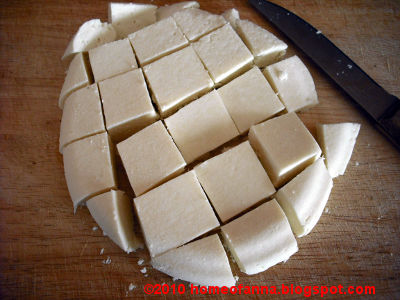
  6. After 3 or 4 hours take the weight off & unwrap the towel. A block of homemade paneer is ready to use. Cut the block into cubes & use it fresh or store it in a freezer for later use.

Plain Yogurt

Things required

  • Milk - 1 quart
  • Live culture - 1 tbspn
  • Non fat dry milk powder - 1/2 cup (optional)
  • Thermometer -(optional)
  • Thermos box or Insulated bag needed during cold weather.

health tip

Yogurt is rich in Calcium, Vitamin B2, B12 & protein. Yogurt has a friendly bacteria Lactobacillus which helps to regulate the digestive system & boost the immune system. Daily consumption of 3 oz of yogurt helps to lower LDL(bad cholesterol) & increase HDL(good Cholesterol). It helps to prevent stomach ulcers & reduce the risk of colorectal(colon) cancer.

Homemade yogurt

method

Yogurt is a fermented dairy product made by adding bacterial culture into milk, which converts sugar(lactose) in the milk into lactic acid. Bacterial culture is derived from existing yogurt. It is important to change culture whenever the yogurt gives off smell or texture. Store bought non-fat plain yogurt can be used as culture. While selecting the store bought yogurt for culture look for the labels with active live culture. Leave the store bought yogurt overnight at room temperature to ferment the culture little more. During summer you can leave it out for 5-6 hours. The end product resembles the culture in taste & flavor. Good quality culture results in flavorful yogurt.

  1. Bring the milk to rolling boil (around 220 degrees)in a stove top. Microwaving is not preferred because of its uneven heating. Boiling the milk prevents contamination. Adding dry milk powder yields thicker yogurt & increase the calcium level.
  2. Let it cool to lukewarm(110 degrees Fahrenheit or 43 degree Celsius).
  3. Pour the milk into a glass or a vessel & add the culture. Leave it overnight in a warm place(100 degree Fahrenheit or 38 degree Celsius). At winter time yogurt can be allowed to set in a thermos box or in an insulated bag. It can also be allowed to set in an oven by pre-heating the oven at 100 degrees. Do remember to turn the oven off after pre-heating. Leave the yogurt in warm oven for 7 -8 hours
  4. At any time of the year it needs to be incubated at 100 degrees for not less than 7 hours. More than 7 hours of incubation yields thicker & sour yogurt. Taste the yogurt after 7 hours & refrigerate it if its done or leave it till it ferments to your desired taste.
  5. Sour yogurt(fermented for 8 hours) is mixed with rice. Sweet yogurt(fermented for 7 hours) is mixed with fruits.

    Adding the culture to milk when it is too hot(more than 110 degree) or too cold(below 100 degree) results in a slimy texture and will not allow the yogurt to set correctly. Extreme changes to temperature in the milk may also kill the bacteria in the culture.


Rice Uppma mix

Ingredients

  • Parboiled rice - 4 cups
  • Raw rice - 2 cups
  • Toor dal - 1 cup
  • Black pepper - 3 tspn
  • Cumin seeds - 2 tspn

method

This mix comes in handy if you are in a hurry or if some unexpected guest arrives. Rice uppma is a fine dish but is always used as an emergency stop gap dish on most functions because of the ease of preparation of this dish. Making uppma with this mix doesn't require lot of skill or time. Although it takes 10 minutes to make the uppma, the mix takes 2-3 days to prepare because of the need to wash and dry the rice and dal (sun or air dried). This mix can be stored for months.

  1. Wash the rice & dal separately & drain the water thoroughly.
  2. Spread them in a towel separately & dry them out under sun if you live in a tropical region. Those who can not dry it out under sun can dry them inside the home by spreading it on a dining table & leave it till it gets completely dry. When you bite a grain or two of rice it should be hard just like the rice before washing. To achieve this level of dryness, you may need to use an even to dry the rice and dal further for few more minutes at the minimum temperature setting. Please use a cookie sheet to dry them in the oven. Keep an eye on the rice so that it does not puff up.
  3. Grind them separately in a blender to a coarse powder (coarser than rava).
  4. Grind the pepper & cumin together into a coarse powder. Mix them all together & store them in a dry place.

    You may mix the ground rice & dal powder together and run them through a sieve to eliminate any finely ground particles. The powder has to be coarse and not too fine for the uppma to come out good.


Whipping Egg whites

1. Egg whites are easier to separate when the eggs are cold.
2.  Wipe down your mixing bowl & beater with white vinegar to ensure that they are free of any lingering traces of oil or grease that could prevent egg whites from whipping up properly. The acid in the vinegar also negates the need for cream of tarter, so if your recipe calls for it, you can leave it.
3. Avoid using aluminum bowls & tools because any acid you add to whites to increase the stability will react with aluminum & turns egg whites gray. Never use cold bowls, as chilled egg whites will take longer time to reach full volume.
4. Egg whites expand up to 8 time in volume, So a mixing bowl accordingly.
5. Egg whites can be beaten to 3 stages. First level is Soft peak. It barley holds the shape. The peak flop over immediately when the beaters are lifted. Second stage is Medium peak. At this stage the whites holds their shape well, but the tip of the peak curls over itself when the beaters are lifted. Third stage is stiff peak. As the name says the peak stands straight.

6. Over beating the whites beyond the third stage results in dry & stiff whipped eggs, which will certainly collapse when heat is applied.
7. When the recipe calls for folding other ingredients after whipping, it is better to fold them using a wire  whisk than using a plastic or metal spatula.  Spatula will put weight on the whipped whites, making them to loose their volume.

Ginger garlic paste(preservative free)

Ginger and Garlic is an essential ingredient in Indian cooking. I normally purchase them in a nearby Produce where they usually sell it in bulk (2-3 pounds). It would go stale if we didn't use them up within a month. So I came up with the idea of freezing it by converting it into a paste to make it last longer & fresher. The main advantage of this over store bought bottled ginger-garlic paste is the lack of preservatives on this one.The frozen paste as I mentioned lasts longer & also retains the freshness. I have been using this method for over a year & have not run into any issues so far. You may also freeze them directly without making them into a paste. This way you can take them out & grate them onto your dishes directly whenever you like. However, to me, paste seems to be a more convenient approach than direct freezing. Below is the method for paste making & freezing.


1. Peel the skin from ginger or garlic whichever paste you are planning to make.
2. Grind the peeled ginger or garlic into a fine paste.
3.  Fill about 1/4th size of a freezer bag. Over filling will make the job tougher to break the ginger paste when needed. Garlic is usually pliable,so it doesn't matter even if you make the garlic sheet a little thicker.Ginger paste gets harder like ice when frozen. Simply add the paste 1/4 or less than the bag size.
4. Take out the air & seal the bag. Spread the paste into an even, thin layer  of sheet & freeze the paste by laying it flat in the freezer.
5. Whenever you need the paste, just break the quantity you need for cooking & put the remaining in the freezer.

Conversion chart

Disclaimer: The following conversion chart is not my contribution. I got it from some other web site/blog & made some modifications to only include the frequently used ones. If you know the actual web or blog address for the source, please let me know & I will mention it here.

Cooking and Baking Abbreviations

teaspoon = tsp or t or tspn.
Tablespoon = Tbl. or Tbls. or T. or Tbsp. or tbspn.
Ounce = oz.
cup = c. or C.
gram = g or gm
kilogram = kg
milliliters = ml
liter = l

U.S. Equivalent
Baking Weights and Measures

Dash = 2-3 drops or less than 1/8 teaspoon
3 teaspoons = 1 Tablespoon
4 Tablespoons = 1/4 cup
5 1/3 Tablespoons = 1/3 cup (5 Tablespoons plus 1 teaspoon = 1/3 cup)
8 Tablespoons = 1/2 cup
10 2/3 Tablespoons = 2/3 cup
12 Tablespoons = 3/4 cup
16 Tablespoons = 1 cup
2 cups = 1 pint
4 cups = 1 quart
32 ounces = 1 quart
4 quarts= 1 gallon
16 oz. = 1 pound
32 oz. = 1 quart
1 oz. liquid = 2 Tablespoons
8 oz. liquid = 1 cup

Metric Equivalent Measures

3 teaspoons = 15 ml
4 tablespoons = 60 ml
5-1/3 tablespoons = 79 ml
8 tablespoons = 118 ml
16 tablespoons = 237 ml
1 fluid ounce = 30 ml
8 fluid ounces = 237 ml
16 fluid ounces = 473 ml
32 fluid ounces = 946 ml

1 cup butter or margarine = 237 g = 1/2 pound
1 cup eggs = 237 ml = 4-5 whole eggs or 8 egg whites or 12 egg yolks
1 cup all-purpose flour = 114 g


Metric Dry and Liquid Measures

.035 ounces = 1 gram
1 ounce = 28.35 grams
1 pound = 453.59 grams or .45 kilograms
2.21 pounds = 1 kilogram

1 teaspoon = 4.9 ml
1 tablespoon = 14.8 ml
1/2 cup = 118.3 ml
1 cup = 237 ml
1.06 quarts = 1000 ml or 1 liter


Common Cooking and Baking
Food Equivalents
Fruits
Bananas:

1 pound = 3 medium= 1-1/3 cups mashed

Lemon Juice:

1 medium lemon = 2-3 Tablespoons juice
5-8 medium lemons = 1 cup

Orange Juice:

1 medium orange = 2-3 Tablespoons juice
3-4 medium oranges = 1 cup juice

Raisins:

1 pound = 3 cups,loosely packed


Eggs, Cheese, and Dairy

Eggs:

1 egg = 4 Tablespoons liquid
4-5 whole eggs = 1 cup
7-9 whites = 1 cup
12-14 yolks = 1 cup

6 eggs to a quart of milk = Perfect baked custard

Egg Whites:

8-10 large egg whites = 1 cup
12-14 large egg yolks = 1 cup

Cream, Heavy or whipping:
1 cup = 2 cups whipped cream

Sugar:

1 pound brown sugar = 2-1/2 cups
1 pound cube sugar = 96-160 cubes
1 pound granulated sugar = 2 cups
1 pound powdered sugar = 3-1/2 cups

Vegetable shortening, Margarine, or Butter:

1 stick = 1/2 cup
1 pound = 2 cups